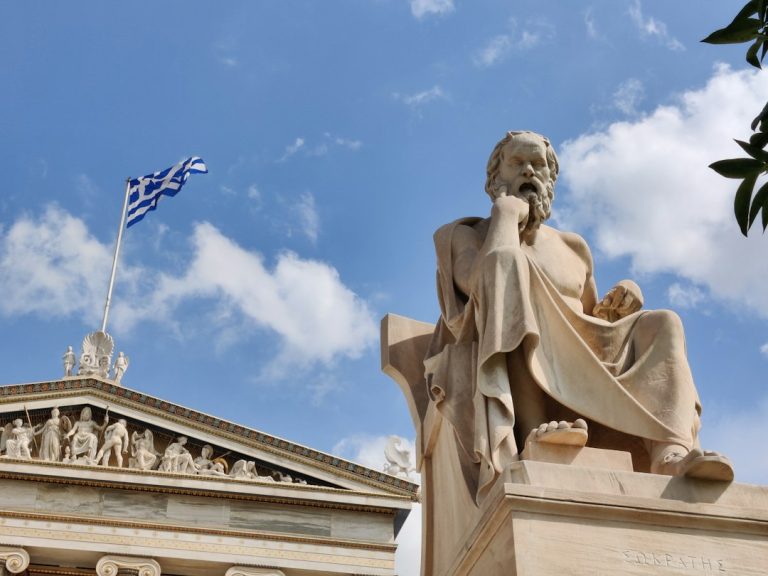
Objectivism, the philosophical system developed by Ayn Rand, might seem like a modern construct, but its roots reach deep into ancient thought. While Rand herself emphasized its unique and integrated nature, many of its core tenets echo ideas explored by philosophers in Ancient Greece. Understanding these historical connections isn’t about diminishing Objectivism; it’s about appreciating the enduring questions and timeless insights that have shaped human understanding for millennia. Looking at these ancient foundations helps us grasp the continuity of philosophical inquiry and how certain fundamental ideas resurface and evolve across different eras.
1. Reason as the Ultimate Guide: Echoes of Aristotle’s Logic
Ayn Rand’s emphasis on reason as humanity’s sole means of knowledge and guide to action is a cornerstone of Objectivism. This isn’t a new concept born in the 20th century. For centuries, Western philosophy has grappled with the power and limits of human reason, and Ancient Greece provided some of its most profound early explorations.
1.1. Aristotle’s Systematic Approach to Logic
When we talk about reason in the Western tradition, Aristotle is an unavoidable figure. His work on logic, particularly in his Organon, laid the foundation for systematic thought for nearly two millennia. He meticulously cataloged forms of reasoning, like syllogisms, and provided tools for distinguishing valid arguments from fallacious ones. This wasn’t just an academic exercise for Aristotle; it was about understanding the world accurately and drawing correct conclusions.
1.2. The Primacy of Observation and Non-Contradiction
Aristotle strongly advocated for empiricism – the idea that knowledge begins with sensory experience. He believed that through observation, we could identify universal principles and categorize reality. Crucially, his principle of non-contradiction, stating that something cannot be both A and not A at the same time and in the same respect, is a bedrock of rational thought. Rand’s insistence on an “A is A” metaphysics directly mirrors this foundational Aristotelian concept, making logic and consistency essential for understanding objective reality. For Objectivism, just as for Aristotle, contradictions are not present in reality itself but are errors in human thinking.
The philosophical foundations of Objectivism can be traced back to ancient Greece, where the ideas of rationality and individualism were first explored by thinkers such as Aristotle. These concepts have influenced modern philosophical thought and continue to resonate in contemporary discussions. For a deeper understanding of how these ancient roots relate to Objectivism, you can read the article titled “Exploring the Positive Angles of Objectivism” at this link: Exploring the Positive Angles of Objectivism.
2. Eudaimonia and Self-Actualization: The Pursuit of Happiness

Objectivism posits that the moral purpose of life is the pursuit of one’s own rational self-interest, leading to a flourishing life. This idea of a good life, centered on individual well-being and fulfillment, has a long history, particularly in Greek ethics.
2.1. Aristotle’s Concept of Eudaimonia
The Greek term eudaimonia is often translated as “happiness,” but it carries a much richer meaning than fleeting pleasure. It refers to a state of living well and doing well, a flourishing life achieved through virtuous activity. For Aristotle, eudaimonia wasn’t a gift; it was something earned through rational action and the development of one’s highest potential as a human being. This involves exercising reason, cultivating virtues, and engaging in activities that are uniquely human.
2.2. Virtues as Means to a Good Life
Both Objectivism and Aristotelian ethics emphasize the role of virtues in achieving a good life. For Aristotle, virtues like courage, temperance, justice, and practical wisdom were not arbitrary rules but character traits that enabled individuals to live well. They were the “golden mean” between extremes. Similarly, Objectivism stresses virtues like rationality, productiveness, justice, and integrity, seeing them as objective requirements for human survival and flourishing. In both systems, these virtues aren’t about self-sacrifice but about self-actualization. They are the means by which one achieves their own happiness and fulfills their potential.
3. Metaphysical Objectivity: Beyond Platonic Forms

Ayn Rand’s metaphysics asserts that reality is objective, existing independently of human consciousness. While she was a strong critic of Plato’s idealism, her commitment to an objective reality and the knowability of the world still finds ancient Greek parallels, albeit with crucial differences.
3.1. Plato’s Realm of Forms vs. Rand’s Concrete Reality
Plato famously posited a realm of perfect, immutable Forms that are more real than the transient objects we perceive with our senses. While Rand would vehemently reject the notion of a separate, non-material reality being more real, her core agreement with Plato lies in the belief that there is an objective reality to be discovered, rather than reality being solely subjective or mind-dependent. Where they diverge is on the nature of that reality and how we access it. Rand insisted on the primacy of concrete, perceivable reality, not an abstract realm.
3.2. Pre-Socratic Materialism and the Knowable World
Before Socrates, many Greek philosophers were concerned with understanding the fundamental stuff of the universe. Thinkers like Thales (water), Anaximenes (air), and Heraclitus (fire) sought to identify the underlying substance or process that constituted reality. While their specific conclusions were primitive, their fundamental project was to understand an external, objective world through observation and reason. This quest for a knowable, tangible reality, albeit in a different form, resonates with Objectivism’s commitment to the existence of an independent, perceivable reality. They all share the conviction that the universe is ordered and intelligible, capable of being grasped by the human mind.
4. Individualism and the Sovereign Self: Socrates and Stoicism
Objectivism champions the individual as an end in themselves, advocating for individual liberty and self-responsibility. This emphasis on the unique value and sovereignty of the individual has clear precursors in ancient Greek thought, even if the societal context was vastly different.
4.1. Socrates and the Examination of One’s Own Life
Socrates famously declared that “the unexamined life is not worth living.” His relentless pursuit of self-knowledge and moral integrity, often at great personal cost, highlights a profound commitment to the individual’s inner world and intellectual autonomy. He challenged societal norms and encouraged people to think for themselves, to question assumptions, and to live according to principles derived from their own reason. This emphasis on individual moral agency and critical thinking is a foundational element that resonates with Objectivism’s call for independent thought.
4.2. Stoicism’s Focus on Internal Control and Self-Sufficiency
The Stoics, a later school of Greek philosophy, placed immense value on individual self-control and moral autonomy. They argued that while external events are beyond our control, our reactions and judgments are entirely within our power. This focus on cultivating inner strength, virtue, and self-sufficiency, regardless of external circumstances, aligns with Objectivism’s emphasis on individual responsibility and resilience. While Stoicism often leaned towards a more detached view of material possessions, its core idea of building a strong, rational self that is the master of its own moral universe is a powerful ancient echo of individual sovereignty. The Stoics aimed for apatheia (freedom from disturbance), which, while different from Rand’s passionate pursuit of values, still required an intense focus on the individual’s inner rational faculties.
The philosophical foundations of Objectivism can be traced back to ancient Greece, where the ideas of rational self-interest and individualism began to take shape through the works of philosophers like Aristotle. These concepts have significantly influenced modern thought, particularly in the realm of ethics and politics. For a deeper exploration of how these ancient roots connect to contemporary movements, you can read more in this insightful article about the evolution of democracy and capitalism in South America. This connection highlights the enduring relevance of Greek philosophy in shaping modern ideologies. To learn more, visit this article.
5. Productiveness and Craftsmanship: The Dignity of Creation
| Aspect | Ancient Greece Influence | Relation to Objectivism | Key Figures |
|---|---|---|---|
| Philosophical Foundation | Emphasis on reason and logic as primary tools for understanding reality | Objectivism upholds reason as the only means of acquiring knowledge | Socrates, Aristotle |
| Ethics | Focus on virtue ethics and the concept of eudaimonia (human flourishing) | Objectivism promotes rational self-interest and individual flourishing | Aristotle |
| Metaphysics | Belief in an objective reality independent of perception | Objectivism asserts an objective reality that exists regardless of consciousness | Plato (Theory of Forms), Aristotle (Substance theory) |
| Epistemology | Knowledge through empirical observation and logical reasoning | Objectivism emphasizes reason and evidence as means of knowledge | Aristotle |
| Political Philosophy | Ideas of individual rights and justice in the polis | Objectivism advocates for individual rights and laissez-faire capitalism | Plato, Aristotle |
A central virtue in Objectivism is productiveness – the creative transformation of nature to serve human life. This idea of the dignity and value of human creation, of shaping the world through effort and skill, can also be found in ancient Greek attitudes, particularly concerning craftsmanship and invention.
5.1. The Valued Role of Artisans and Craftsmanship
While ancient Greek society often idealized the contemplative life and held manual labor in lower esteem for citizens (often relying on slaves for it), the products of craftsmanship were highly valued. Greek artisans were celebrated for their skill in sculpting, architecture, pottery, and engineering. The creation of beautiful and functional objects, from temples to tools, was essential to Greek life and culture. The meticulous skill and innovative spirit involved in these endeavors, transforming raw materials into something new and useful, speaks to an underlying appreciation for human productive power.
5.2. Prometheus as a Symbol of Human Creative Fire
The myth of Prometheus, who stole fire from the gods and gave it to humanity, is a powerful ancient symbol of human creativity, innovation, and the drive to improve one’s condition through intellect and skill. Fire, representing technology and productive power, enabled humans to build, craft, and advance beyond their primitive state. Prometheus’s act, while defying the gods, ultimately empowered humanity to shape its own destiny through the application of knowledge and effort – a foundational theme that echoes strongly in Objectivism’s celebration of human ingenuity and productive achievement. The idea that human flourishing is dependent on human effort and the creation of values, rather than passive reception, is clearly present in this ancient narrative.
The philosophical foundations of Objectivism can be traced back to ancient Greece, where thinkers like Aristotle laid the groundwork for individualism and rational thought. For a deeper exploration of how these ancient roots influenced modern philosophical movements, you can read this insightful article on the historical connections to Objectivism. Understanding these links can provide a richer context for the principles that underpin this philosophy. To learn more, visit this article.
6. Philosophy as a Practical Guide to Life: Socratic and Hellenistic Schools
For Ayn Rand, philosophy wasn’t an abstract academic exercise; it was an intensely practical guide for living. She saw it as providing the fundamental principles necessary to define one’s values, make moral choices, and build a flourishing life. This practical orientation of philosophy is deeply rooted in ancient Greek thought.
6.1. Socrates’s Philosophy of Living Well
Socrates’s entire philosophical project was about examining how one should live. He didn’t write treatises; he engaged in dialogue, probing the fundamental questions of ethics, justice, and the good life directly with individuals. For him, philosophical inquiry was inseparable from the pursuit of moral excellence and a well-lived existence. His method aimed at clarifying concepts and correcting mistaken beliefs that led to poor choices, making philosophy a direct tool for self-improvement and ethical conduct.
6.2. Hellenistic Schools and the Art of Living
Later Greek schools, particularly during the Hellenistic period (e.g., Stoicism, Epicureanism, Skepticism), were explicitly framed as “arts of living.” Their primary purpose was to provide frameworks, principles, and practices for individuals to navigate life’s challenges, achieve tranquility (ataraxia or apatheia), and live according to reason. These schools offered comprehensive systems that addressed metaphysics, epistemology, and ethics, all with the ultimate goal of guiding individuals toward a fulfilling and meaningful existence. This tradition of philosophy as a vital, practical discipline for shaping one’s life is a clear ancestor to Objectivism’s integrated system aimed at guiding human action and values.
7. The Power of Heroism and the Ideal Man: Greek Tragedies and Epics
Objectivism places a high value on heroism, the pursuit of greatness, and the ideal of a man of extraordinary ability and moral stature. While the specific moral framework differs, the ancient Greeks, through their myths, tragedies, and epics, celebrated similar aspirations and explored the nature of human excellence and its challenges.
7.1. Achilles and Odysseus: Striving for Excellence
In Homer’s epics, figures like Achilles and Odysseus embody different facets of human greatness. Achilles represents unparalleled prowess, strength, and a fierce commitment to honor and reputation. Odysseus, on the other hand, exemplifies cunning, intellect, resilience, and an unwavering determination to overcome obstacles and return to his values. Both, despite their flaws and the tragic elements of their stories, are depicted as men striving for and achieving extraordinary things. They are not passive; they are agents who shape their own destinies to the extent possible, demonstrating courage and will. These characters embody a drive for excellence and a capacity for significant achievement that resonates with Objectivism’s admiration for the “man of ability.”
7.2. The Celebration of Achievement and Individual Greatness
Greek culture, especially in its earlier periods, often celebrated individual achievement, whether in warfare, athletics (like the Olympics), or artistic creation. The heroes of their myths and plays, while often flawed and subject to fate, were nonetheless celebrated for their exceptional qualities, their struggles, and their impact on the world. This focus on individual characters who rise above the ordinary, who are driven by conviction and possess remarkable capabilities, reflects an underlying cultural appreciation for human greatness and the potential for heroic endeavor. While the Greeks had a more tragic view of man’s ultimate fate, their profound exploration of human potential, moral choice, and the striving for excellence provides a rich backdrop to Objectivism’s ideal of the self-made, heroic individual who lives by his own rational judgment.
FAQs
What is Objectivism?
Objectivism is a philosophical system developed by Ayn Rand that emphasizes rational self-interest, individualism, and the pursuit of one’s own happiness as the moral purpose of life. It advocates for a capitalist society where individuals are free to act according to their own judgment and values.
How are the roots of Objectivism connected to Ancient Greece?
The roots of Objectivism can be traced back to Ancient Greek philosophy, particularly the works of Aristotle. Rand admired Aristotle’s emphasis on reason, logic, and the importance of the individual, which she integrated into her own philosophical framework.
Which Ancient Greek philosophers influenced Ayn Rand’s Objectivism?
Ayn Rand was primarily influenced by Aristotle, whose ideas on ethics, metaphysics, and epistemology shaped her views on rationality and individualism. Additionally, the pre-Socratic philosophers, such as Heraclitus and Pythagoras, also contributed to her understanding of reality and knowledge.
What role does reason play in Objectivism as derived from Ancient Greek thought?
Reason is a central tenet of Objectivism, reflecting Aristotle’s belief that human beings are rational animals. Rand argued that reason is the only means of acquiring knowledge and that individuals must use their rational faculties to make choices and achieve their goals.
How does Objectivism view ethics in relation to Ancient Greek philosophy?
Objectivism posits that ethics should be based on rational self-interest, a concept that aligns with Aristotle’s virtue ethics, which emphasizes the importance of achieving personal excellence and happiness. Rand’s ethical framework advocates for the pursuit of one’s own values while respecting the rights of others, drawing from the individualistic aspects of Ancient Greek thought.
About the Author